October 2023

California Sees Infusion of $443 Million in Federal Funds for Housing and Community Development in Fall 2023

Off
Sacramento, CA
Model homes in empty field.

The State of California and Biden Administration are excited to announce a fall 2023 infusion of $443 million in federal housing funding that will have a historically wide reach throughout California, particularly in small and rural communities.

The four U.S. Department of Housing and Urban Development (HUD) funded programs for which California Department of Housing and Community Development (HCD) will issue Notices of Funding Availability (NOFA) in October and November will provide grants and loans that support everything from affordable rental housing, to rental assistance and support services, to home-ownership assistance, to property rehabilitation and infrastructure improvements – reaching historically under resourced communities in every corner of the state.

“This needed infusion of funds from the Biden Administration will support communities throughout the state, especially in our rural areas,” said Governor Gavin Newsom. “Many of these smaller communities are the backbone of our critical agriculture economy, however, despite their importance, they often go underserved. This investment will help close the gap and bring more housing to all parts of California.”

“This historic push to align funding program timelines provides smaller jurisdictions – particularly geographically isolated communities with limited staff resources – with a unique opportunity to access federal dollars to meet the critical needs of their residents,” said HCD Director Gustavo Velasquez. “Our thanks to the Biden Administration and our partners at HUD for helping us ensure equity in our housing funding reach. My team stands ready to provide robust support to help communities in need be successful in applying for these opportunities.”

“California is a national leader ensuring good places to live are within reach of working families. With over $400 million in funding from four key HUD programs, California will make meaningful investments in affordable housing and community services. Without a doubt, this will include small and rural areas where it will have a transformative impact,” said HUD’s Principal Deputy Assistant Secretary of Community Planning and Development Marion McFadden. “This funding will serve communities and people on the front lines of some of the big challenges we’re facing today, from housing affordability to increasing threats from natural disasters.”

Just last week, HCD issued a $172 million NOFA and hosted several webinars for the National Housing Trust Fund (NHTF), which funds new construction of permanent affordable housing for extremely low-income residents – those earning up to 30% of the Annual Median Income. Ten percent of this NOFA is targeted for eligible Tribal applicants.

Today, HCD issued an additional $89 million HOME-American Rescue Plan (HOME-ARP) Rental Housing Program NOFA to help cities, counties, affordable housing developers, and Tribes acquire, build, or rehabilitate affordable rental housing for low-income residents experiencing or at risk of homelessness.

In the weeks ahead, HCD anticipates the release of two additional federal NOFAs. The first of these is a $120 million HOME Investments Partnership Program (HOME) NOFA that provides grants and low-interest loans to benefit low-income renters, homebuyers, and homeowners. Most assistance is in the form of loans made by city and county recipients to project developers, to be repaid to local HOME accounts for reuse. Eligible activities include acquiring, building, or rehabilitating homes; downpayment assistance; and tenant-based rental assistance. More than half of HOME funds will go to rural communities, including California’s agricultural heartland. Twenty percent of HOME funds are targeted for Tribal Entities.

HCD will also issue a $30 million NOFA for the HOME-ARP Housing Plus Support Program (HPSP). Eligible applicants include Tribal Entities and nonprofit Supportive Service Providers that specialize in connecting families to permanent housing. Funds will be used to get individuals and families into permanent housing, provide onsite housing case management and services to retain the housing, and to improve residents’ education, employment, and health status.

Finally, $13 million in Emergency Solutions Grants (ESG) from a recently closed NOFA are expected to be awarded this fall. These funds will help local governments and nonprofits rapidly re-house individuals and families living on the street and provide them with shelter and essential services.

The fall total of $443 million includes a $19 million NOFA issued in late September for the Community Development Block Grant (CDBG) program, which provides grants to small and rural non-entitlement districts, non-federally recognized Tribes, and Colonias – which are historically challenged by a lack of infrastructure. CDBG seeks to stabilize and uplift communities through investments in locally determined priorities like community centers, childcare centers, economic development programs, sewer and utility upgrades, parks, and rehabilitation projects.

Visit the homepage for each program at HCD.CA.GOV for additional details on eligibility, deadlines, in-person workshops, webinars, and application materials.


Contact Details:

Pablo Espinoza
Deputy Director of Communications
HCD Press Office
Media@hcd.ca.gov

  • Press Release
  • Affordable Housing
  • October 30, 2023
    Off
    Article

    State Releases Accountability Report on San Francisco’s Housing Policies and Practices

    Off
    Sacramento, CA
    Report cover of San Fracisco Housing Policy and Practice Review. Image of San Francisco.

    Today, Governor Gavin Newsom announced the release of the San Francisco Housing Policy and Practice Review, a comprehensive analysis of the patterns that created decades of costly building delays in San Francisco.

    Why it’s important: San Francisco has the longest timelines and some of the highest procedural hurdles in the state for advancing housing projects to construction. These delays, combined with some of the highest housing construction costs in California, create a barrier to addressing the community’s unmet housing needs.

    If San Francisco’s current rate of housing approvals and construction continues, the City will miss its housing production goal of over 82,000 new homes by 2031 that is necessary to address affordability and overcrowding challenges experienced by the current population, as well as providing homes for future San Franciscans. San Francisco must add over 10,000 new homes, including over 5,800 affordable homes, each year. So far in 2023, San Francisco has permitted less than one home a day.

    “California’s affordability crisis is one of our own making – the decisions we made limited the creation of housing we need. Nowhere is this fact more evident than in San Francisco. This report is an important first step to address the decades of issues that have held back San Francisco’s ability to build more housing. City leaders have come to the table to work with us on addressing these issues and implement solutions,” said California Governor Gavin Newsom.

    Among key findings, the report highlights policies and practices inconsistent with state housing law, delay caused by the City’s discretionary review processes, and negative impacts from local politics on housing outcomes – all of which have real costs and dire consequences for Californians in need of housing.

    In late 2022, the California Department of Housing and Community Development’s (HCD) Housing Accountability Unit (HAU) announced that it would work with the UC Berkeley Institute of Urban and Regional Development and others to analyze San Francisco’s housing approval policies and practices, including discretionary decision-making that creates excessive and costly delays. The resulting Housing Policy and Practice Review includes a comprehensive set of required actions and an implementation plan, with the first steps expected to be taken within the next 30 days.

    “San Francisco’s notoriously complex, cumbersome, and unpredictable housing approval process came onto the state’s radar for good reason, as this rigorous HCD investigation and UC Berkeley research bore out,” said HCD Director Gustavo Velasquez. “HCD does much more than name San Francisco’s housing problems with this unprecedented Policy and Practice Review. We name very specific actions to bring the City into compliance with housing law and its own Housing Element, and which will move San Francisco into a new housing era with increased housing supply and affordability. Ultimately, these efforts will help stem the tide of displacement and make it possible for working class families to return to the City.”

    The Review lays out a clear path forward for San Francisco in the form of 18 Required Actions with implementation timeframes, and an additional 10 Recommended Actions.

    The Actions fall into the following categories:

    • Eliminate discretion and subjectivity in planning review.
    • Reform local CEQA practices.
    • Reform the local administrative appeals process.
    • Expedite and standardize post-entitlement permitting.
    • Increase accountability and transparency in the housing approvals process.

    The Housing Policy and Practice Review was informed by a rigorous, objective academic investigation led by Moira O’Neill, Associate Research Scientist at UC Berkeley’s Institute for Urban and Regional Development. The investigation included in-depth data analysis, interviews, and feedback from a multitude of stakeholders in various roles. The full academic report from O’Neill is included with the Housing Policy and Practice Review.

    "Our conclusions are data-driven,” said O’Neill. “The research conducted for this project further expanded our existing robust housing dataset, allowing us to understand the decision-making patterns that delay or deny housing development in San Francisco. My colleagues and I design research to provide insights useful to policymakers. Our hope with this work was that the state would be able to use the findings and identify actionable strategies and best practices to align local housing policies, laws, and planning practices with state requirements and priorities.”

    Today’s announcement is part of an aggressive approach by the Newsom Administration to ensure accountability at the local level for the development of housing in communities throughout the state. Since taking office, Governor Newsom and the Legislature have invested $30 billion in affordable housing production and enacted dozens of CEQA reforms into law. In addition, Governor Newsom championed the creation of the HAU to hold cities and counties to their legal responsibilities to plan and permit their fair share of housing. This focus on accountability has in part led to a 15-year high in housing starts in California.

    Contact Details:

    Pablo Espinoza  
    Deputy Director of Communications  
    HCD Press Office  
    Media@hcd.ca.gov

  • Accountability
  • Press Release
  • October 25, 2023
    First-of-its-kind review finds San Francisco practices are out of compliance with state housing laws and negatively impact development – report sets course to remove barriers to housing production and increase transparency
    Off
    Article

    Governor Invests $736 Million to Build on Successes of Homekey in Addressing Homelessness Statewide

    Off
    Sacramento, CA
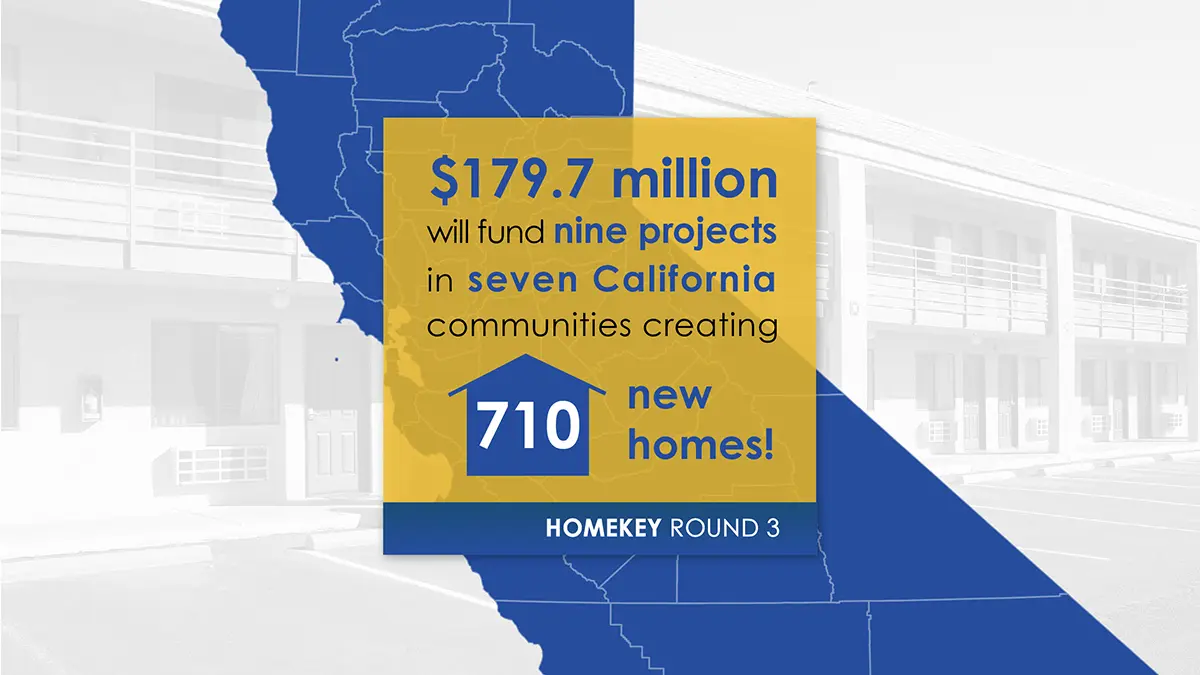
    $179.7 million will fund nine projects in seven California communities creating 710 new homes.

    Governor Gavin Newsom today announced the first grant awards from Round 3 of Homekey, the Administration’s initiative to help jurisdictions rapidly expand availability of permanent or interim housing for individuals and families experiencing, or at risk of, homelessness.

    Of $736 million in Homekey grants available in Round 3, today’s $179.7 million in awards will fund nine projects in seven communities up and down the state, creating 710 new homes.

    Originally launched months into the COVID-19 pandemic as an extension of Project Roomkey – to eliminate the need for congregate shelters and curb the spread of disease among a particularly vulnerable group of Californians – Homekey funded 12,774 new homes through its first two rounds. Round 3 will build on those successes.

    “Governor Newsom’s signature Homekey program continues to demonstrate progress through partnership on solutions that rapidly create deeply affordable homes for people exiting homelessness,” said Business, Consumer Services and Housing Secretary Lourdes Castro Ramírez. “Under this third round of Homekey, our partnership with these seven communities will result in more than 700 affordable interim and permanent places for unhoused Californians to call home with access to vital supportive services. Congratulations to all!”

    “Created to respond to an unprecedented public health crisis, Homekey has grown and evolved to house a broader population of Californians at risk of homelessness, including young people transitioning to adulthood from foster care or an unsafe environment,” said Gustavo Velasquez, Director of the California Department of Housing and Community Development (HCD.) “Nearly 13,000 homes were created through Rounds 1 and 2. My team at HCD is proud to shepherd this Administration’s ongoing investment in quickly and safely housing California’s most vulnerable in communities statewide.”

    A map of the state of california with numbers showing the communities receiving funding. 1 - Housing Authority of the city of sacramento $20.3 million; 2 - housing authority of the county of sacramento $20 million; 3- city of modesto $16 million; 4- city of fresno $21.9 million; 5 - city of visalia $13.8 million; 6 - city of san buenaventura $32 million; 7 - county of los angeles $34.6 million; 8 and 9 - san diego housing commission $3.9 million and $16.8 million.


    Homekey Round 3 grant funding – administered by HCD – is available to local public entities including cities, counties, tribal entities, and housing authorities to develop a broad range of housing types including hotels, motels, hostels, single-family homes, multifamily apartments, adult residential facilities, manufactured housing, and to convert commercial properties and other existing buildings to permanent or interim housing.

    Applications received by the July 28, 2023, Notice of Funding Availability deadline requested a total of nearly $1.27 billion. HCD continues its review of applications, and grants will be announced on a rolling basis until all funds are exhausted.

    • The Housing Authority of the City of San Buenaventura will receive $32,076,607 in Homekey Round 3 funding for the Valentine Road project, an acquisition and rehabilitation project that will convert an existing hotel to create 136 permanent housing units to serve people who are homeless, at-risk of homelessness, and chronically homeless.
    • The Housing Authority of the County of Sacramento,in partnership with the John Stewart Company and TLCS, Inc., will receive $20,000,000 in Homekey Round 3 funding for the Arden Star Hotel Homekey Conversion, an acquisition and rehabilitation project that will convert an existing hotel to create 122 permanent housing units, as well as two manager units, to serve people who are homeless or are at risk of homelessness.
    • The Housing Authority of the City of Sacramento, in partnership with TLCS, Inc., will receive $20,386,000 for the Roadway Inn Homekey Conversion, an acquisition and rehabilitation project that will convert an existing hotel to create 69 permanent housing units, as well as one manager unit, to serve people who are homeless or at risk of homelessness.
    • The City of Fresno, in partnership with Valley Teen Ranch, will receive $21,983,607 for Welcome Home, a modular multifamily new construction project that will create 95 permanent housing units, along with one manager unit. Thirty-five units will serve people experiencing homelessness, and 60 units will serve homeless youth and youth at risk of homelessness.
    • The City of Visalia, in partnership with RHCB Development, will receive $13,835,376 for Majestic Gardens, an acquisition and rehabilitation project that will convert an existing motel to create 41 housing units serving people who are chronically homeless, as well as one manager unit.
    • The City of Modesto, in partnership with RHCB Development, will receive $16,059,562 for the Travelers, an acquisition and rehabilitation project that will convert an existing motel to create 55 permanent housing units serving those who are homeless and youth who are homeless or at-risk of homelessness, with the addition of one manager unit.
    • The County of Los Angeles, in partnership with the Weingart Center Association, will receive $34,629,600 for The Weingart Sycamore, an acquisition and rehabilitation project that will convert an existing hotel to create 107 studio units to serve 54 chronically homeless and 53 at-risk of homelessness, as well as two manager units.
    • The San Diego Housing Commission will receive $3,900,000 for Abbott Street Apartments, an acquisition and rehabilitation project of an existing multi-family building to create 13 housing units serving those who are chronically homelessness and one manager unit.
    • The San Diego Housing Commission will receive $16,850,000 for Pacific Village, an acquisition and rehabilitation project that will convert an existing Ramada Inn Hotel to create 62 housing units serving those who are homeless, chronically homeless, and youth who are homeless or at risk of homelessness and one manager unit.


    Contact Details:
    HCD Press Office
    Media@hcd.ca.gov
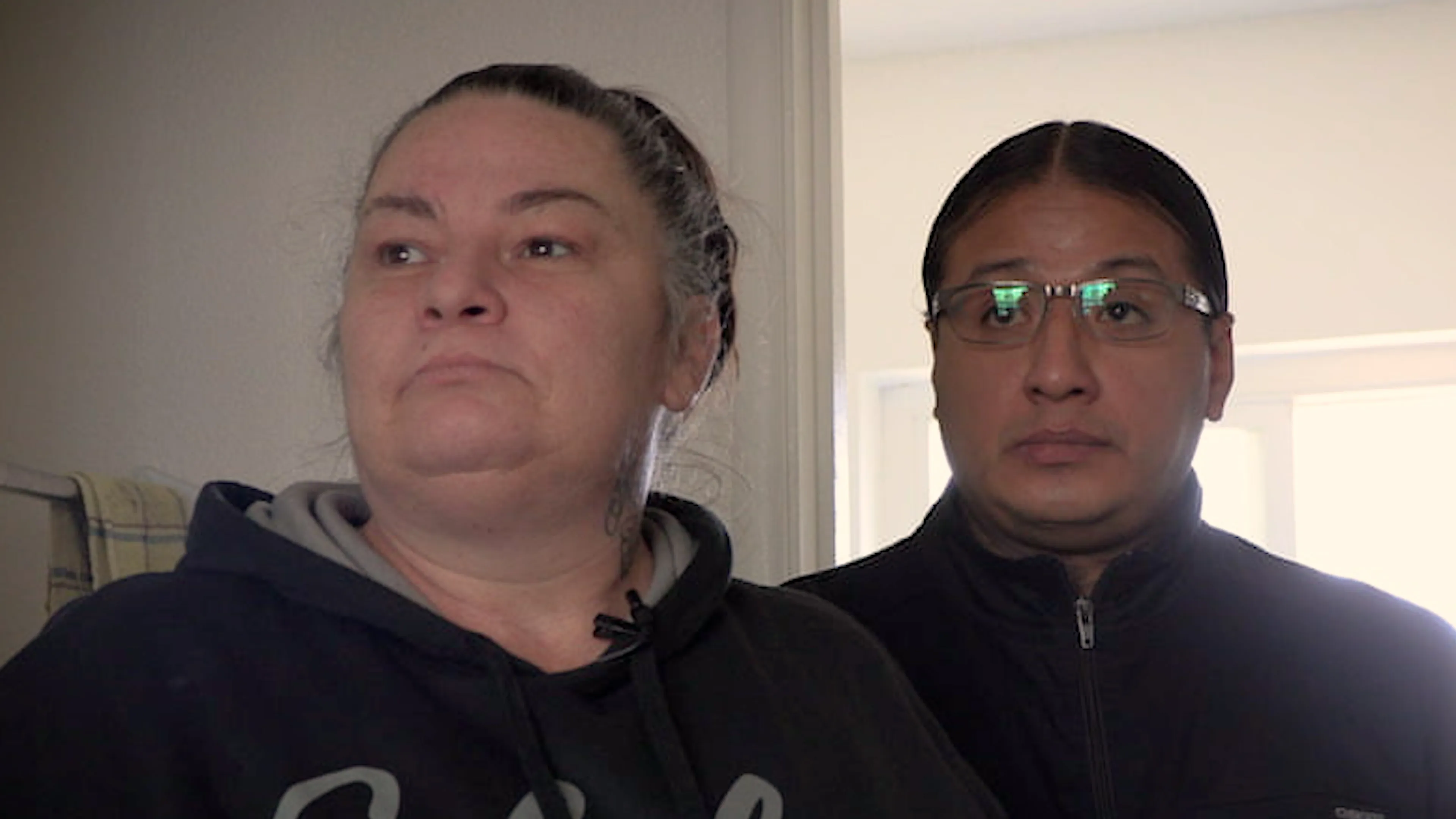
     

    Hear two stories of people positively affected by Homekey! Make sure to click the images to watch the videos!

    Resident Alice


    Meet Alice and her husband Alfredo. They lived in a tent for two years. Alice is moved to tears sharing her joy to now have a place they can call home thanks to the Homekey program by HCD.

    Residents Heather and Robert


    Heather and Robert had a long journey, moving from periods of being unhoused and on the streets, to being separated from each other in a shelter situation. Now, they get to live and enjoy each other's company thanks to a unit made possible through Homekey.

  • Affordable Housing
  • Homekey
  • Press Release
  • October 10, 2023
    Initial Round 3 Grants of $179.7 Million to Create 710 Homes in Seven Counties
    Off
    Article

    California to Support the Acceleration of Affordable Housing and Climate-Friendly Infrastructure in Tribal and Rural Communities

    Off
    Sacramento, CA
    Map of California with awarded counties highlighted. Text reads $54 million in the second round of REAP 2.0 awards includes grants of 12 tribal and rural communities to advance sustainable, affordable, and equitable communities.

    California today announced more than $54 million to support climate resilience by helping communities plan for and build more infill homes and infrastructure that support walking, rolling, biking, and transit as an alternative to driving. Today’s awards include $29 million set aside to support a dozen Tribal and Rural communities in addressing their unique planning challenges.

    “California tribes and rural areas face unique challenges when making infrastructure improvements and building affordable housing,” said Business, Consumer Services and Housing Agency Secretary Lourdes Castro Ramírez. “These grants recognize that affordable housing and infrastructure conditions vary widely across tribal lands and rural areas and provide greater local control to plan and respond to local priorities and needs. The state is proud to partner with tribes and rural areas to catalyze development of climate-friendly homes and promote stronger local economies.”

    Administered by the California Department of Housing and Community Development (HCD), the Regional Early Action Planning Grants of 2021 (REAP 2.0) program makes progress toward our statewide housing goal of 2.5 million new homes by 2030 with 1 million of those being for low-income residents. The work that is enabled through this funding is locally led and includes planning for infill housing, infrastructure, and community investments that increase housing supply and choice, and reduce vehicle miles travelled—all while affirmatively furthering housing equity.

    The REAP 2.0 program builds partnerships with regions, tribal communities, and stakeholders by funding both planning and implementation actions that are community led and will encourage community growth that includes climate-friendly affordable housing and benefits existing residents through infrastructure while reducing toxic greenhouse gas emissions from cars.

    “Too often, lack of sufficient infrastructure is a financial roadblock to building housing—particularly for tribal communities and rural areas,” said HCD Director Gustavo Velasquez. “These awards show the state’s coordinated commitment to ensuring no community is left behind because of lack of infrastructure. I am proud of the partnership we’ve built with tribal and rural communities so we can tailor our programs to meet their needs and together build more climate-smart homes and communities.”

    Over $54 million in REAP 2.0 grants were awarded today to 12 Tribal and Rural communities, as well as four metropolitan planning organizations:

    • Big Valley Band of Pomo Indians, $5,000,000
    • Fernandeño Tataviam Band of Mission Indians, $410,000
    • Hoopa Valley Housing Authority, $4,893,017
    • Indian Cultural Organization & Winnemem Wintu Tribe, $2,060,042
    • Soboba Band of Luiseño Indians, $2,180,000
    • Wiyot Tribe, $4,998,048
    • City of Nevada City, $300,000
    • County of Calaveras, $1,747,972
    • County of Colusa, $2,406,513
    • County of Inyo, $220,000
    • County of Tuolumne, $3,085,000
    • Humboldt County Association of Governments, $2,699,407
    • Butte County Association of Governments, $2,650,286
    • Fresno Council of Governments, $13,000,000
    • Merced County Association of Governments, $3,621,545
    • Santa Barbara County Association of Governments, $5,255,471

    The Big Valley Band of Pomo Indians will receive $5,000,000 to undertake a rancheria-wide master planning process, develop infill housing, and make utility and infrastructure improvements, including wayfinding, a pedestrian path, and a bus stop.

    Fernandeño Tataviam Band of Mission Indians (FTMBI) will use its $410,000 award to develop 14 affordable homes on a transit- and amenity-rich site, setting the stage for the first Tribal Housing Development in Los Angeles. FTMBI will also provide services such as rental assistance, food, and transit passes to residents.

    Hoopa Valley Housing Authority will receive $4,893,017 to develop utility, sewer, and active transportation infrastructure that will support a 35-unit affordable senior housing community in the near term, and an additional 25 units in a future phase of development.

    The Indian Cultural Organization, on behalf of the Winnemem Wintu Tribe, will utilize their $2,060,042 award for Tuiimyali, their ecovillage revitalization project. These funds will go toward the construction of approximately 18 homes that would reunite all 96 members in one location and reduce annual Vehicle Miles Traveled (VMT) by an estimated 280,992 miles.

    The Soboba Band of Luiseño Indians will receive $2,180,000 for the development of an infill housing project and connected multi-use paths. Program funds will go toward outreach, feasibility studies, predevelopment activities, and construction related to the development of housing units, as well as two multi-use bicycle and pedestrian paths.

    The Wiyot Tribe will use its $4,998,048 award to acquire four underutilized, infill sites throughout Humboldt County to redevelop into affordable, multifamily housing projects.

    The City of Nevada City will receive $300,000 to develop pre-approved residential designs that can be used to accommodate accessory dwelling units, SB 9 developments, or small primary homes that could be permitted without a discretionary review.

    The County of Calaveras will receive $1,747,972 in REAP 2.0 funds to cover the cost of permit fees and utility connections for approximately 76 lower- to moderate-income homes near public transit and employment centers.

    The County of Colusa will receive $2,406,513 in REAP 2.0 funds for planning and predevelopment activities, as well as infrastructure projects, that will support 48 income-restricted homes affordable to lower-income households.

    The County of Inyo will use its $220,000 award for zoning and General Plan updates that will reduce land use and zoning barriers. These updates will encourage development that focuses on new growth within and near existing communities that will improve the relationship between jobs and housing while also being sensitive to environmental constraints.

    The County of Tuolumne will use its $3,085,000 award for the expansion of the Jamestown Sanitary District sewer system and wastewater treatment facilities and the construction of the Valley Vista Water Storage Tank, which will support future housing developments in several of the County’s large and undeveloped parcels.

    Humboldt County Association of Governments will receive $2,699,407 to fund an on-demand micro transit program and infill housing development project through partnerships with the Humboldt Transit Authority (HTA) and We Are Up (WAU) nonprofit organization, respectively. On average, the micro transit program is estimated to lower per-capita VMT along with a 28% reduction from the WAU infill development, which is expected to be 50 units.

    Butte County Association of Governments will receive a $2,650,286 award to construct pedestrian and bicycle improvements in the City of Biggs; facilitate complete street improvements in a low-income area of the City of Chico; construct pedestrian and bicycle infrastructure along the Highway 99 corridor in the City of Gridley; facilitate active transportation connections between important activity centers and destinations in the downtown area of the City of Oroville; establish a Sewer Service Overlay Zone along main commercial arterials in the Town of Paradise; and fund predevelopment work for affordable multifamily housing in the Town of Magalia.

    Fresno Council of Governments will suballocate the entirety of its $13,000,000 award to local jurisdictions to fund projects that accelerate infill housing development, affirmatively further fair housing, and reduce VMT.

    Merced County Association of Governments will suballocate its $3,621,545 through two suballocation programs – one non-competitive RHNA-based suballocation for local jurisdictions to utilize for eligible planning activities and one competitive suballocation to be used for transformative capital improvement projects.

    Santa Barbara County Association of Governments will suballocate its $5,255,471 award to the following projects: infrastructure improvements in the City of Santa Maria; a permit-ready ADU program in the City of Lompoc; construction of a prototypical single-family home utilizing 3D printing construction technology; countywide active transportation dashboard; connective, multipurpose path in the City of Goleta; pilot housing project in the City of Santa Barbara converting vacant and underutilized city-owned property to affordable housing; 100% affordable housing project in the Town of New Cuyama.

    To learn more about REAP 2.0, visit the HCD website.

    BCSH Logo  HCD Logo

  • Press Release
  • Affordable Housing
  • Climate Mitigation
  • October 9, 2023
    $54 Million in Regional Early Action Planning Grants Include Support for 12 Tribal and Rural Communities in their fight for Climate Resiliency and Equity
    HCD Media
    Off
    Article
    Top