January 2024

Seven California Communities Earn Prohousing Designation

Off
Sacramento, CA
Image of city scape with Prohousing over the top.

Governor Gavin Newsom announced today that the cities of Eureka, Healdsburg, Mountain View, Petaluma, San Luis Obispo, and Santa Monica, and the County of Tulare, have earned the coveted designation as Prohousing communities for their efforts to encourage development of housing at all income levels. This designation comes with funding incentives and additional resources to help speed housing production. Today’s announcement brings to 37 the total number of California communities designated as Prohousing.

Why it matters: The Statewide Housing Plan demonstrated that California needs to plan for 2.5 million new homes over the next eight years, with at least one million serving the needs of lower-income Californians. Reaching that goal will only be possible with the concerted efforts of state and local governments actively working to implement state housing laws and best practices that go above and beyond. The Prohousing Designation rewards communities that are willing to cut through red tape, reduce construction and development costs, and create housing policies with a growth mindset by providing them with funding incentives and additional resources that help scale up those innovative efforts.

What Governor Newsom said: “We need to aggressively build more housing to support Californians. Prohousing cities move to the front of the line when it comes to incentives, funding and other state resources. It’s critical for more communities to join in this distinction and build their fair share of housing.”

The Prohousing Designation Program is part of a package of supports, incentives, and accountability measures established by the 2019-20 Budget Act. By earning the Prohousing Designation, communities receive exclusive access to Prohousing grants and additional points in the scoring of competitive housing, community development, and infrastructure funding programs administered by the Department of Housing and Community Development (HCD).

“Communities whether large or small, rural or urban, are actively working to accelerate the development of housing for Californians at all income levels,” said HCD Director Gustavo Velasquez. “We are pleased to be able to reward our Prohousing partners with incentives to help them build on their innovative efforts to break down barriers to development.”

map of California with prohousing cities. Text reads: Prohousing welcomes 7 jurisdictions. A total of 37 California communities are now designated as prohousing and are eligible for funding incentives and additional resources through a state grant program designed to speed the production of housing.


The use of incentives and supports encourages California communities to find creative solutions around barriers to housing production—barriers which have contributed to the current housing affordability crisis that has been decades in the making. Whether it is through accelerated production, equitable zoning, sustainable land use, reduced development costs, or financial subsidies, the 37 Prohousing communities are actively working toward the state’s goal of permitting 2.5 million new homes by 2030.

On January 23, HCD announced new permanent Prohousing Designation Program guidelines, as well as a Notice of Funding Availability for the second round of the Prohousing Incentive Program. Prohousing jurisdictions have until March 15, 2024, to apply for a share of the $9.5 million available through this current round of incentives.

For local leaders, earning the Prohousing Designation takes commitment to policies that accelerate housing production and minimize obstacles. These leaders must proactively work with state leaders to combat homelessness and increase the availability of affordable housing in their jurisdictions, bettering the quality of life for all Californians. Jurisdictions earning the Prohousing Designation are aggressively taking on that challenge with resilience, steadfast determination, and accountability.

City of Eureka
The City of Eureka is implementing a variety of policies to further housing production and reduce barriers to development. The city removed open space requirements in all zones and added residential subdivision alternatives. Each single-family lot is allowed up to four housing units, and a total of three units are allowed on each half of a lot split, bringing the total to six. The city also reduced parking requirements using exemptions such as no parking required for accessory dwelling units (ADUs), SB 9 units, affordable housing, and small units.

City of Healdsburg
The City of Healdsburg has demonstrated a commitment to lowering barriers to affordable housing and preparing for the future. The city implemented a fee reduction to tentative and finalized maps to incentivize lot splits. They offer a bonus for projects in which 100 percent of the remaining units not restricted to lower-income households will be affordable to moderate-income households; they incentivized ADUs in single-family neighborhoods by offering construction loans with debt forgiveness provisions in return for longer-term, price-restricted rentals; and they directed two percent of transient occupancy tax towards new and existing affordable housing.

City of Mountain View
The City of Mountain View has demonstrated a strong commitment to promoting new housing development, encouraging smart growth policies, and reducing fees. The city adopted an internal process to streamline building and planning permits for 100 percent affordable housing projects. They made affordable housing developments within the city exempt from multiple fees and directed in-lieu fees to a trust fund for affordable housing. The city also adopted maximum parking requirements at or less than ratios prescribed by State Density Bonus Law.

City of Petaluma
The City of Petaluma has shown a dedication to encouraging housing growth and reducing barriers to affordable housing construction. The city reduced the applicability of impact fees for most affordable housing projects and directed in-lieu and commercial linkage fees to a trust fund for the development and preservation of low-income housing. They partnered with the Sonoma Napa County ADU Accelerator Program to adopt permit-ready ADU plans and adopted universal design standards to reduce planning requirements. The city has also ensured sufficient sites to accommodate 244 percent of the current housing needs allocation requirement.

City of San Luis Obispo
The City of San Luis Obispo has adopted policies which will create new housing developments and further the construction of more housing. The city instituted a Hillside Planning Program, allowing for an increase in development intensity on slopes and hillsides. They passed an ordinance adopting objective design standards to remove subjective design standards. They also waived city-wide impact fees on affordable housing that exceeds inclusionary requirements, voluntarily provides affordable housing, or is built and operated by the local housing authority, a nonprofit agency, or a government agency.

City of Santa Monica
The City of Santa Monica shows a commitment to increasing affordable housing and reducing construction costs. The city identified sufficient sites for 13,600 new housing units and eliminated parking requirements for residential development citywide, increasing available land for development. They ministerially approve all ADUs and junior accessory dwelling units (JADUs) regardless of size, and waive all development impact fees on those units. They also created an ADU handbook that includes step-by-step instructions, prototypical ADU plans, and parcel configurations. Additionally, the city provides financial assistance for the acquisition, rehabilitation, and new construction of affordable rental housing opportunities for lower-income households.

Tulare County
Tulare County is taking multiple steps to increase housing supply and remove restrictions to development. The county has adopted a density bonus ordinance for affordable housing for lower- and moderate-income households, for seniors and disabled persons, and for developments that include a childcare facility. They do not charge developer impact fees. They also updated their zoning ordinance to allow for JADUs in any residential zoned property, including multi-family zones.

Visit HCD’s prohousing page for more information.

  • Press Release
  • Prohousing
  • January 31, 2024
    Governor Newsom has now recognized 37 jurisdictions for breaking down barriers to housing
    Pablo Espinoza
    Off
    HCD Media
    Deputy Director of Communications
    Article

    Governor Newsom Announces Designation of Three More California Jurisdictions as Prohousing for Strides Made to Accelerate Housing Production

    Off
    Sacramento, CA
    Graphic of the capitol building and HCD logo.

    Today, Governor Gavin Newsom announced that an additional three communities, the city of El Cerrito and the counties of Placer and Sacramento, have earned the state’s Prohousing Designation. Cities and counties earn Prohousing designations by adopting ordinances and processes that cut red tape and speed up housing approvals in their own communities. Being designated Prohousing gives jurisdictions a leg up in securing state housing and infrastructure funding.

    Why it’s important: It is vital for local governments to cut red tape and implement policies that increase needed housing in California. Accountability measures and incentives like the Prohousing Designation are critical to help meet the goal of 2.5 million new homes over the next eight years, with at least one million serving the needs of lower-income Californians.

    “The Prohousing Designation is the result of communities stepping up and being proactive when it comes to their commitment to build more housing, faster in California,” said Governor Newsom. “Under my Administration, the old practices of stalling and denying developments by local governments will not be tolerated. Jurisdictions can either be part of the solution or be held accountable. I commend this latest group added to our Prohousing Designation and look forward to seeing more communities throughout the state join us in this effort.”

    Communities that earn the Prohousing Designation receive incentives such as additional points or other preferences in the scoring of competitive funding programs administered by the Department of Housing and Community Development (HCD), giving them an advantage over other jurisdictions.

    “Building more housing statewide and increasing the availability of affordable homes for working Californians, families with children and individuals exiting homelessness is critical to bettering the quality of life for all Californians,” said Business, Consumer Services and Housing Agency Secretary Lourdes Castro Ramírez. “Combining state housing investments with tools like the California Prohousing Designation will enable communities like El Cerrito, and the counties of Placer and Sacramento to produce more housing options quickly and create more equitable communities.”

    These jurisdictions join seven others recognized for a commitment to policies that increase housing supply such as accelerating production, promoting equitable and sustainable zoning and land use, reducing development costs, and providing financial subsidies. They are also eligible for the Prohousing Incentive Pilot (PIP) Program that rewards Prohousing communities for such commitments.

    Governor Newsom’s Fiscal Year 2019-20 budget established the Prohousing Designation Program as part of a spectrum of support, incentives, and accountability measures to help meet California’s goal of 2.5 million new homes over the next eight years, with at least one million of those homes serving the need of lower-income Californians.

    Prohousing jurisdictions are also eligible for community development resources through the new Prohousing Incentive Pilot (PIP) Program. The competitive program has $25.7 million in additional flexible funding available to help accelerate housing production and expand the preservation of affordable housing.

    “California continues to deploy a comprehensive set of strategies to increase housing supply, including unprecedented investment, incentives like those attained through the Prohousing Designation, and holding local governments accountable for meeting community housing needs,” HCD Director Gustavo Velasquez said. “We look forward to continuing our investment in these efforts, as we work together to build 2.5 million homes statewide by 2030.”

    To earn the Prohousing Designation, cities and counties must demonstrate they are promoting climate-smart housing by enacting Prohousing policies, including but not limited to streamlining multifamily housing development, up-zoning in places near jobs and transit to reduce emissions, and creating more affordable homes in places that historically or currently exclude households earning lower incomes and households of color.

    Placer County (awarded January 3) is the first county in California to receive the Prohousing Designation. One of the county’s application highlights is the increase of height limits in several multifamily zones to expand housing opportunities. The county also developed a universal entitlement application to expedite permit processing and created zoning to allow for Tiny Homes on Wheels, increasing housing choices while concurrently mitigating the impacts of fire hazards. Lastly, the county has established consistent funding for its local housing trust fund to both preserve workforce housing and to purchase additional sites for affordable housing development.

    The City of El Cerrito is promoting innovative housing types, notably the multi-phase Mayfair Project, which received local housing trust funds and utilizes modular housing technology to reduce cost and building times. In addition, El Cerrito implemented a post-entitlement process to further accelerate and streamline housing development. As another example, the San Pablo Avenue Specific Plan prioritizes mixed-use housing in conjunction with transit-oriented development and implements form-based zoning with program-level environmental review. Lastly, a variety of housing types are approved ministerially, such as multifamily residential land uses and projects complying with objective design standards, thus significantly reducing review times and providing increased approval certainty to project developers.

    Sacramento County’s application highlights include the modification of development standards and other applicable zoning provisions to promote greater development intensity. In addition, the county provides impact fee reductions for residential development and permits “missing middle” housing in typically lower-density, single-family residential zones. Lastly, the county uses holistic planning strategies in an effort to reduce vehicle miles traveled and greenhouse gas emissions.

    What local elected officials are saying:

    “It’s a point of pride for Placer County to be a state leader in our efforts to streamline affordable housing projects, highlighting infill projects that help us grow responsibly and reduce commutes for our residents,” said Jim Holmes, chair of the Placer County Board of Supervisors. “Becoming the first county to earn a Prohousing Designation allows our community development staff and our development partners to be as competitive as possible to capture grant dollars for construction and maintain affordability for homebuyers.”

    “Sacramento County has recently updated its Zoning Code to allow for streamlined residential development by allowing additional residential projects to be allowed by-right, and establishing a ‘minor’ level use permit for certain deviations from the Zoning Code,” said Rich Desmond, chair of the Sacramento County Board of Supervisors. “This streamlining has allowed an expedited permitting process, which will accelerate housing development in the County, including the development of Accessory Dwelling Units (ADUs). Ongoing Zoning Code updates to implement the County’s certified Housing Element will further promote housing in key infill corridors, further reducing vehicle miles traveled and associated greenhouse gas emissions. Staff have proactively engaged with key stakeholders in infill corridors to identify and address constraints to further housing development.”

    “El Cerrito has worked very hard to bring new housing to our community over many years through our San Pablo Avenue Specific Plan and its recent amendment, supporting streamlining and flexibility to support all types of housing development, but especially more affordable housing,” said El Cerrito Mayor Lisa Motoyama. “We know that is what keeps our city vibrant. We are so excited to achieve the ProHousing designation so that we can be an example to other small cities of what can be done when we are good partners with HCD. Kudos to our city staff for making it happen!”

    For more information on HCD’s Prohousing Designation and Prohousing Incentive Pilot Programs, please visit www.hcd.ca.gov.

    # # #

  • Press Release
  • Prohousing
  • February 3, 2023
    Off
    Article

    Modesto Community Celebrates Grand Opening of Sustainable, Affordable Housing

    Off
    Modesto, CA
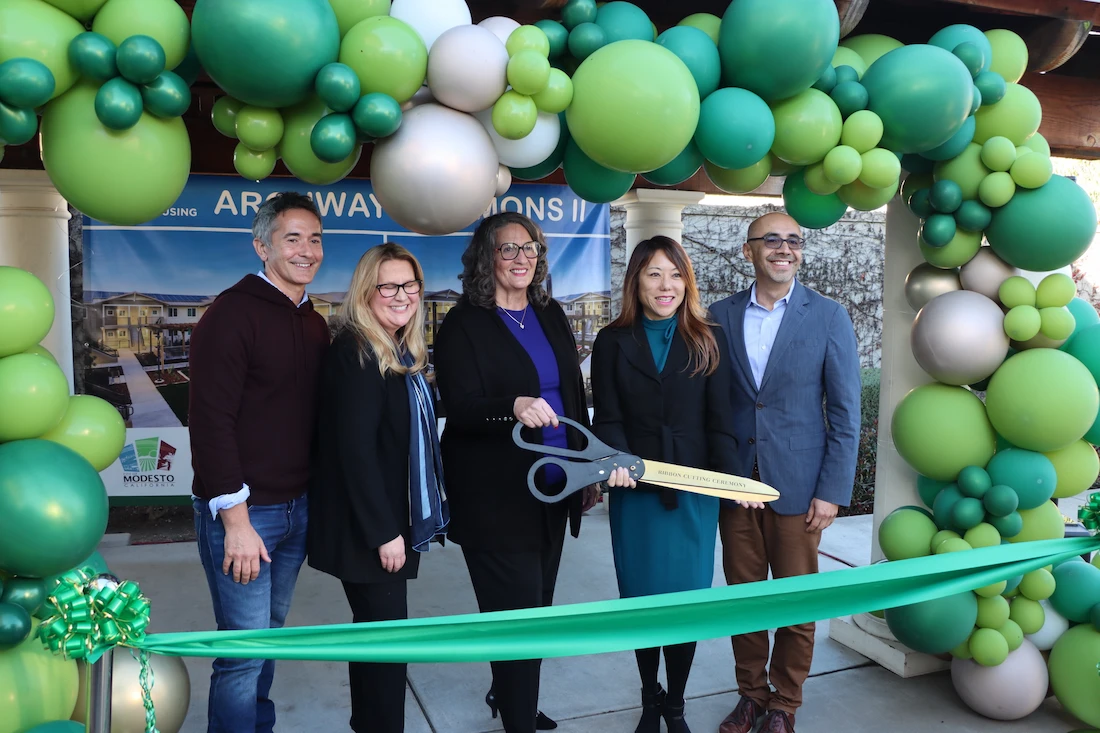
    Director Gustavo Velasquez, State Treasurer Fiona Ma, Mayor Sue Zwahlen and others at Archway Commons II ribbon-cutting.

    HCD Director Gustavo Velasquez joined State Treasurer Fiona Ma and Mayor Sue Zwahlen in celebrating the grand opening of Archway Commons II, a new affordable housing development in Modesto, CA. 

    This project by EAH Housing, combined with Phase I completed in 2013, provides 150 units for families and seniors and more than three acres of housing and amenities including a community center, swimming pool, and computer learning center. 

    “One of the best parts of my job is to come to communities like this one, to celebrate the work that goes into, and the success that comes out of, making affordable housing dreams come true for people like working families, seniors, veterans, other Californians,” said Director Velasquez. “Sustainable and affordable housing developments are what this state so desperately needs.”

    Archway Commons II is also a model for sustainable living and meets the state’s Zero Net Energy goals with their use of solar paneling to offset 100% of the common and residential energy load.

    This project was funded with nearly $25 million from the Affordable Housing and Sustainable Communities Program (AHSC), which is administered by the Governor’s Strategic Growth Council and implemented by HCD.

    “AHSC supports projects like this one to help reduce greenhouse gas emissions, and to also benefit disadvantaged communities by increasing access to affordable housing, employment centers, and other important destinations,” said Director Velasquez.

     Across the state, $2.5 billion has been invested through AHSC since 2015, creating 15,300 new affordable homes with an estimated 4.4 million metric tons of emissions reduced.

    View the video below of the grand opening event and to hear from Archway Commons resident Victoria.

  • Affordable Housing
  • Success Stories
  • January 26, 2024
    Off
    Article

    Volunteers Hit the Streets to Count People Experiencing Homelessness (Video)

    Off
    Sacramento, CA
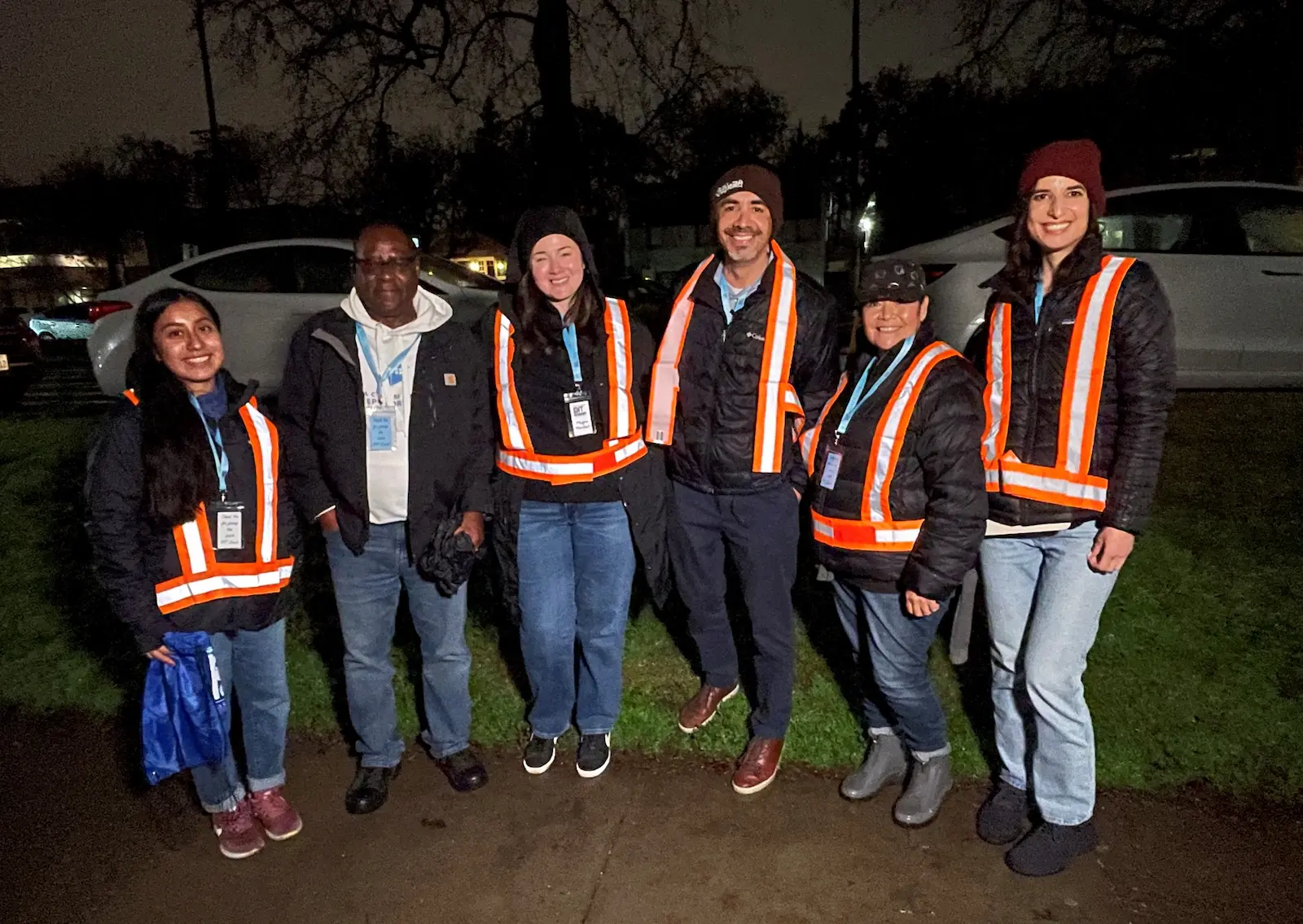
    HCD Director Gustavo Velasquez, HCD staff and other volunteers at the 2024 PIT Count in Sacramento.

    On Wednesday, January 24, HCD Director Gustavo Velasquez and Department staff joined more than 800 volunteers for a two-night effort to count those people currently experiencing homelessness in Sacramento.

    Known as the Point in Time (PIT) Count, this event occurs every other year in late January in communities across the nation. Volunteers count the number of sheltered and unsheltered persons in real time and gather important data that help shape future services and programs for people who are without stable housing.

    Director Velasquez said that the value of participating in the PIT Count is being able to go out in the community and speak to people.

    “You are able to talk to people experiencing homelessness and get a full story of what they are going through, what they are living, why they are living this way, and what the Newsom Administration in partnership with localities can do to support them and get them out of the cycle,” said Director Velasquez.

    “These are families. These are our neighbors. We need to support them. We need to ensure that they have a network of support services available to them,” he said.

    View the video below to hear Director Velasquez speak about the PIT Count.

  • Homelessness
  • January 24, 2024
    Off
    Article

    California Reaches Settlement with City of Fullerton over Violations of Housing Element Law

    Off
    Sacramento, CA
    Graphic of legal scales and HCD logo

    California Governor Gavin Newsom, Attorney General Rob Bonta, California Department of Housing and Community Development (HCD) Director Gustavo Velasquez, and the City of Fullerton today announced an agreement requiring the city to reach compliance with the state’s Housing Element Law. The city will adopt a plan to allow for the development of 13,209 housing units, of which 5,187 would be low- or very low-income. The agreement, which is in the form of a stipulated judgment, is related to California’s sixth “housing element update cycle” for the 2021-2029 time period.  

    Under the state’s Housing Element Law, every city and county in California is required to periodically update its housing plan to meet its share of the regional and statewide housing needs. Fullerton failed to adopt a compliant housing plan for the 2021-2029 time period by the October 15, 2021, statutory deadline. HCD provided direct guidance and reminders to the city — ensuring its leaders were fully apprised of their legal duty to submit a housing element for HCD’s review. As a result of this settlement, the city will now adopt a compliant housing element no later than November 5, 2024, and modernize its zoning code to accommodate thousands of affordable homes by December 29, 2024. Today’s settlement also resolves separate but related claims filed by Californians for Homeownership, Inc.

    “Fullerton has committed to stop litigating and start building. California is facing a housing crisis, and the status quo is simply unacceptable,” said Governor Gavin Newsom. “More communities must step up and do the right thing by building their fair share of housing or be held accountable.”

    “The City of Fullerton is more than two years late in adopting a compliant housing element, but this agreement lays out a clear path to compliance with milestones, as well as consequences if they fail to meet those commitments,” said Director Gustavo Velasquez. “HCD takes enforcement of our state housing laws seriously. We are committed to helping Fullerton and cities and counties across the state adopt and implement prohousing policies, and we are focused on ensuring we each do our part to address the housing needs of Californians at all income levels.” 

    “California’s Housing Element Law is an essential tool in our fight to equitably address our housing shortage, and local governments must follow the law and do their part,” said Attorney General Rob Bonta. “I applaud the Fullerton City Council, and its planning and legal team, for recognizing that public resources should be directed at collaborating, rather than further litigating, our way out of California’s housing crisis. By working together, California can achieve our goal of ensuring that every city provides more affordable housing options to Californians in need.” 

    "We filed our lawsuit against Fullerton because it had become clear that the City needed a strong push to restart its housing element process and get the job done," said Californians for Homeownership attorney Matthew Gelfand. "This settlement realizes that goal while allowing the City enough time to put together a strong plan to build housing affordable for families at all income levels. We are grateful to Attorney General Bonta, Governor Newsom, and HCD for inviting us to participate in this global settlement of our litigation and the state's." 

    State law requires local governments to include housing elements in their general plans, which serve as a “blueprint” for how the city and/or county will grow and develop. A housing element must include, among other things, an assessment of housing needs, an inventory of resources and constraints relevant to meeting those needs, and a program to implement the policies, goals, and objectives of the housing element. Once the housing element is adopted, it is implemented through zoning ordinances and other actions that put its objectives into effect. The housing element is a crucial tool for building housing for moderate-, low-, and very low-income Californians and redressing historical redlining and disinvestment. 

    Fullerton failed to adopt a housing element on time, and then took no action for over a year after it received a letter from HCD finding that its draft did not substantially comply with the Housing Element Law. HCD contacted and met with the city on several occasions and ultimately, due to the lack of compliance, referred the matter to the California Attorney General’s Office for enforcement.

    Under the settlement:

    • Fullerton will adopt a compliant housing element by no later than November 5, 2024. The housing element process is typically lengthy — for example, local governments must meet certain public participation requirements and HCD must review every local government’s housing element to determine whether it complies with state law and provides written findings back to each local government. However, Fullerton has agreed to an expedited timeline while ensuring the public’s participation.
    • Fullerton must modernize its zoning code by December 29, 2024, in order to meet the housing targets set forth in its compliant housing element.
    • Fullerton agrees to comply with the Affirmatively Furthering Fair Housing statute (AFFH). AFFH requires local governments to take meaningful actions that overcome patterns of segregation and foster inclusive communities, free from barriers that restrict access to opportunity based on protected characteristics.
    • Fullerton acknowledges that, until the time it adopts a substantially compliant housing element, it will not deny housing projects on the basis of zoning or general plan inconsistencies.
    • If Fullerton fails to abide by the settlement and does not cure its default, it may lose its authority to approve or deny certain types of development, or be ordered to take specific actions that maximize its ability to fulfill its Regional Housing Needs Allocation obligations, with an emphasis on facilitating homes for households earning below the area median income. Additionally, monetary penalties will be imposed if Fullerton remains noncompliant 12 months after the effective date of the stipulated judgment.

    A copy of the petition and proposed judgment, which details the settlement terms and remains subject to court approval, can be found here and here.
     

  • Press Release
  • Accountability
  • January 18, 2024
    Off
    Article

    Homekey Funds More Than 15,000 Homes for Californians at Risk of Homelessness

    Off
    Sacramento, CA
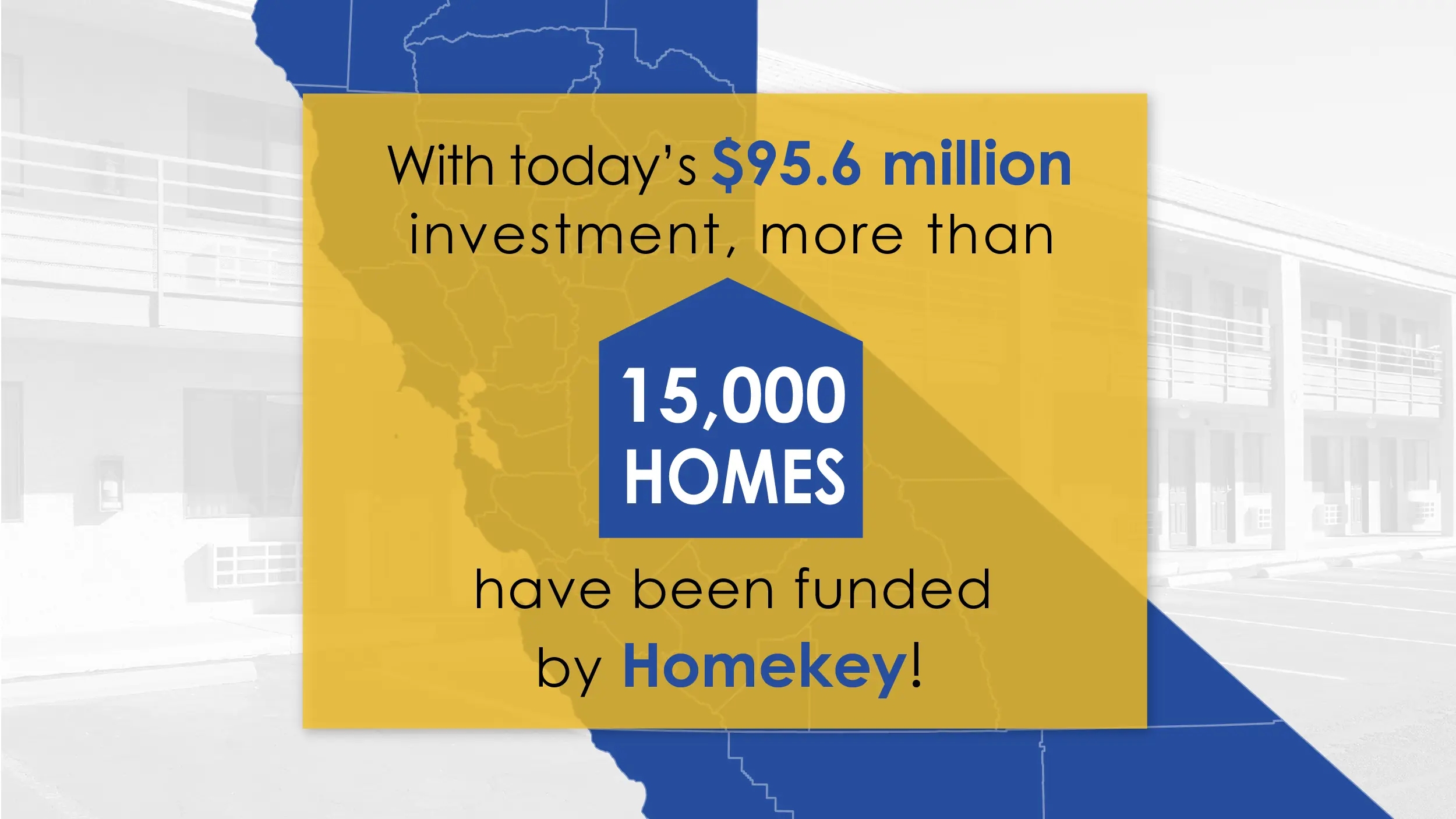
    Map of California with overlay text with today's $95.6 million investment, more than 15,000 homes have been funded by Homekey!

    Governor Gavin Newsom today announced more grant awards from the third round of Homekey, the Administration’s initiative to help communities to address the challenge of homelessness by rapidly expanding the availability of housing for at-risk individuals and families.

    The six projects newly funded, totaling nearly $95.6 million, will create 396 affordable homes. So far in Round 3 of Homekey, the California Department of Housing and Community Development (HCD) has made awards to fund 2,235 homes. Today’s awards bring the total of homes funded across three rounds of Homekey to 15,009. These homes are expected to serve 163,260 Californians over the life of the projects.

    “Homekey is a national model for rapidly creating affordable housing for Californians in need," said Governor Newsom. "In a few short years, this initiative has created more than 15,000 homes, to help over 163,000 people. Homekey demonstrates what is possible when people think outside the box and refuse to accept the status quo.”

    Originally launched months into the COVID-19 pandemic as an extension of Project Roomkey – to curb the spread of disease among Californians in congregate shelters – Homekey funds additional building types and supports a broader population of people experiencing or at risk for homelessness. This includes young people transitioning to adulthood from foster care or an unsafe environment.

    “Over a three-year period, Homekey has funded projects that will provide housing security to more than 163,000 Californians over the decades to come,” said HCD Director Gustavo Velasquez. “The current set of awards includes housing dedicated to veterans, and the conversion of a shuttered hospital to shelter those experiencing homelessness. This program has allowed jurisdictions to get creative with adaptive reuse of existing spaces, and with providing a full array of services that help make homelessness rare, one time, and non-recurrent.”

    Map of California with awarded cities highlighted. Text reads: Governor Gavin Newsom today announced the fourth batch of round 3  Homekey grants, totaling a nearly $95.6 million investment, which will create 396 homes in six communities. Lassen County, $2.9 million; Marin County $14.4 million; City of Oakland, $20.4 million; Santa Cruz County, $3.6 million; City of San Luis Obispo, $19.4 million; City of San Bernardino, $34.9 million.


    Homekey Round 3 grant funding – administered by HCD – is available to local public entities including cities, counties, tribes, and housing authorities to develop a broad range of housing types including hotels, motels, hostels, single-family homes, multifamily apartments, adult residential facilities, and modular housing, and to convert commercial properties and other existing buildings to permanent or interim housing.

    HCD continues reviewing applications, and grants will be announced on a rolling basis until all funds are exhausted.

    • The County of Marin, in partnership with Homeward Bound of Marin, will receive $14,400,000 for the Novato Veterans and Workforce Housing project, a new construction project that will create 50 permanent housing units serving individuals who are homeless or chronically homeless.
    • The City of Oakland, in partnership with California Supportive Housing and CSH Enterprise Housing LP, will receive $20,368,264 for the CSH Enterprise Housing project, an acquisition and rehabilitation project that will convert an existing motel to create 104 permanent housing units serving individuals experiencing or at risk of homelessness, as well as homeless youth.
    • The City of San Bernardino, in partnership with Lutheran Social Services of Southern California and Dignity Moves, will receive $34,944,702 for the Community Wellness Campus project, a new construction project that will create 140 modular housing units to serve people who are chronically homeless.
    • The City of San Luis Obispo, in partnership with People’s Self-Help Housing Corporation, will receive $19,358,270 for the Calle Joaquin Homekey project, an acquisition and rehabilitation project that will convert an existing motel into 76 units serving individuals who are homeless, chronically homeless, or at risk of homelessness, as well as homeless youth.
    • The County of Santa Cruz, in partnership with CFSC, Inc., will receive $3,577,362 for the Freedom House Interim Housing project. The project will convert an existing single-family residence to create 11 studio interim housing units, all with kitchenettes and bathrooms, to serve the youth who are experiencing, or at risk of, homelessness.

    Please visit the HCD Homekey page for more information.

  • Press Release
  • Homekey
  • January 18, 2024
    Today’s Awards Will Create 396 Homes, Including a Development for Veterans and the Conversion of a Former Hospital
    Pablo Espinoza
    Off
    HCD Press Office
    Deputy Director of Communications
    Article

    Governor Newsom Announces Awards of More Than $825 Million to Build Affordable Housing Through Accelerated Approval Process

    Off
    Sacramento, CA
    Headline announcement with graphic of the state capitol and HCD logo.

    To continue expanding the state’s affordable housing stock and increase capacity for additional climate-smart infill housing, Governor Gavin Newsom today announced the first funding awards under a new streamlined application process aimed at accelerating the development of new projects while saving time and money at the local level.

    What you need to know: Approximately 58 communities across California were awarded more than $825.5 million to build 9,550 homes as part of a new funding approval process that eliminates the need for a developer to submit multiple applications. This includes roughly $700 million in funds for multifamily development and $125 million for infill development. Today’s funding announcement will ultimately benefit an estimated 187,500 people over the total lifetime of all projects combined.

    Why it’s important: The application process to receive state housing funding in California was needlessly complex, and time consuming, resulting in delayed projects and extra cost. Under Governor Newsom, this process has been overhauled. Now, what previously required four separate applications has been narrowed down to just one submission.

    What Governor Newsom said: “As we demand more housing to be built at the local level, it is incumbent upon the state to reimagine and modernize our own approval process,” said Governor Newsom. “State applications that were once redundant, and overly bureaucratic, are now streamlined to ensure projects are not stalled in an endless bureaucracy that favored process over production.”

    This new process was made possible when Governor Newsom signed into law Assembly Bill 434 by former Assemblymember Tom Daly (D – Anaheim), which allowed for multiple housing applications to be narrowed down into a single award process. Under this new approach, requests for housing development funds have soared. The first round of new Multifamily Finance Super Notice of Funding Availability (Super NOFA) received more than $3.5 billion in developer requests – a sharp contrast to years of undersubscription.

    “The California Multifamily Super NOFA transformed a once burdensome and lengthy funding application process into an accessible and smart one-stop shop that will get more housing built faster,” said Business, Consumer Services and Housing Agency Secretary Lourdes Castro Ramírez. “This results in new homes for struggling working families, veterans, farmworkers, and people exiting homelessness. California will continue to act with urgency to find new, innovative solutions to fast track housing development.”

    The California Department of Housing and Community Development (HCD) last year combined state-funded multifamily housing programs to make them accessible to more communities, more equitable in serving the lowest-income Californians, and more targeted toward achieving better outcomes in health, climate, and household stability.

    “California continues to advance our commitment to building 2.5 million homes — with one million affordable homes — by 2030, as outlined in our Statewide Housing Plan,” said HCD Director Gustavo Velasquez. “Our simple approach to funding helps us accelerate much-needed construction and ensure the lowest-income Californians have access to quality homes near jobs, transit, schools, and other necessities that will make our communities more inclusive for decades to come.”

    See the full list of Multifamily Finance Super NOFA awards.

  • Press Release
  • February 9, 2023
    9,550 homes to move forward statewide through a new streamlined application process
    Off
    Article
    Top